Showing posts with label Web Technology. Show all posts
The process of discovering a new topic to write about, deciding the shape the material should take, formalizing your plan, and then actually producing it is known as content creation.

Furthermore, most content development processes include multiple rounds of editing with various stakeholders before the content is ready for publication.

Because content can take many different forms — blog posts, videos, eBooks, tweets, infographics, and advertisements, to mention a few – the process of creating it is multifaceted and not always as straightforward as it may appear.

Making Money with Your Content


We'll talk about how the rapid development of content creation is assisting people in making the most money. And how to make money by creating material that attracts attention and how to check for plagiarism using various tools before displaying your content to make a profit.

Produce Content Constantly


Consistency is the key to success. When you constantly write great content, you follow a better method gradually. You can't be inconsistent as a content creator if you are trying to make a living. If your audience enjoys your material, you have to keep making more content so they return.


Make sure that all of your content is unique and free of plagiarism. You can utilize various online plagiarism checkers to ensure that your audience is not turned off by receiving duplicate content.

When you stop meeting your audience's expectations and delivering consistent material, they will likely go on to someone else.

Make use of branded collaborations


If you want to build a long-term income flow, you must focus on your audience's perception of your brand. It's vital to create a one-of-a-kind experience that distinguishes you from the competition. It's tough, however, to create that rich and unforgettable experience on your own.

Form strong branded connections to help your content get traction. A branded partnership is when you collaborate with other businesses to share and cross-promote your content to their audiences.

Make Money with Your Work


Everyone fighting for attention on the internet is in a competitive atmosphere. Making money online will be difficult if you don't know what you're offering or who your target market is. As a result, only sell what you're good at to set yourself apart from the competitors.

You won't be able to make money if your information is plagiarized, so make sure you check plagiarism before putting it on show.

Ask yourself a fundamental question: why would consumers buy my products and use my content when they can get the same information and items from other reliable sources? It's at this point that you appreciate the value of focusing on a specific market segment. If you try to get to everyone, you'll end up speaking to no one. So, do what you're good at and find the right people to share your work with.

Make Exclusive Content Available


Making money online is not a one-time task when you offer something that is unique and amazing. It's not possible that you'll be able to make a few contents and start making money. You must be consistent, relevant, and outcome-oriented. You develop material to attract and build your audience first, and then you create new content regularly.

Let's pretend you still don't have any internet fans. It is where your premium content will come in to help your work. If you have something unique to share, there are many platforms that you can choose.

When creating material, you must ensure that it is 100 percent original and devoid of plagiarism. You can use an online plagiarism checker for this reason, which helps you check for plagiarism hence you can create original material that will appeal to your target audience.

Advertisements on Social Media


While selling exclusive material is a difficult business, you must still make sure that people know it. Social media advertisement may require some financial investment, but it will help you in attracting people who are unfamiliar with your content.

Direct Marketing


Direct advertising is frequently a good opportunity for content creators to make money. You can put clickable advertising on your website. After that, the advertiser will pay you for the revenue earned by tap. You can also include adverts in your YouTube videos, depending on the type of content you make. You will then be paid every time a user watches your videos' adverts.

While it is pretty simple, you must be cautious about the types of advertisements you run. Finally, you don't want to promote a product that may hurt your reputation.

Conclusion


While there are many options for content creators to earn money, start with the basics. Feel free to try several strategies to find which one works best for you. Experiment with something else if one of them isn't working for you. Make sure, however, that you establish yourself as an expert on social media.

Every day, work on increasing your network and developing a solid personal brand. Take advantage of every chance to promote the material that comes your way.

Build a following and monetize your work correctly. Most importantly, pursue your passions. You will be followed by money.

Learn what Content Creation is and How is it Profitable?

Hitherto, Microsoft was unfriendly to open source; but now, the company is crediting the increased adoption of the .NET software to open source, according to a post on its official blog.

While the Windows Compatibility Pack was released in 2017, with 20,000 APIs added to .NET Core for Windows, Linux, and macOS, making it easy for developers to move code from Windows-oriented .NET Framework to cross-platform .NET Core.

As .NET Core enables web apps that can easily scale and run on Linux, the addition of the .Net Framework APIs made it even more resourceful.

How Microsoft .NET adoption gets bolstered by open source?


The .NET framework originally ran only on Windows, before Microsoft first considered sharing the .NET Core on GitHub. At the time, GitHub was a relatively unknown platform for many of its developers, who obviously had a lot of questions about how the platform worked.


Now, several .NET customers who historically composed their apps using Microsoft-supplied libraries, which were closed-source, are comfortable depending on non-Microsoft libraries, which are typically open source.

Therefore, open source is the most sustainable way to build a stack with wider support, over an ever changing development landscape of operating systems and architectures.

Why open source is important for the .NET project?


Admittedly, modern developer stack needs to be cross platform, as open source is the most sustainable way to build a stack and enables anyone to view, debug, and contribute to the runtime used to build their application.

Thus, open Source has helped ensure that the .NET project is fully available beyond a single vendor, that is, Microsoft.

Microsoft looks to open source to bolster .NET adoption

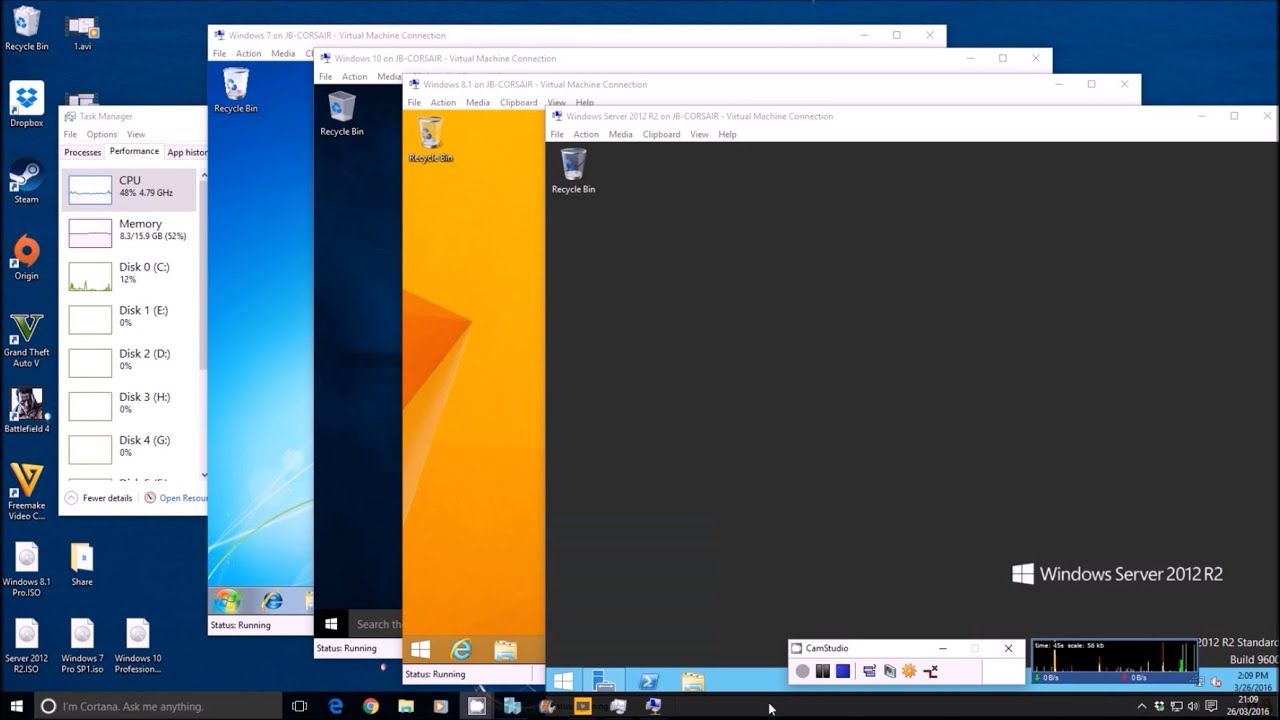
Microsoft Hypervisor (Hyper-V) is a virtualization technology developed by Microsoft which specifically serves as hardware virtualization, allowing users to run multiple operating systems virtually on Windows platform.

Now, Microsoft is looking to make Linux run as a root partition on its Hyper-V technology, with the company's engineer Wei Liu pushing out a series of patches to Linux’s Hyper-V code. While the RFC (request for comment) patches are aimed at making Linux run as a root partition (like Xen’s Dom0) on Hyper-V.

Hyper-V not only lets you run multiple virtual operating systems on the Windows platform, but also, it allows users to create virtual hard drives and network switches.

How Linux root partition support for Microsoft Hypervisor will work?


Microsoft is looking to create a complete virtualization stack with Linux and Microsoft Hypervisor, which will be a subsequent patch series to provide a device node (/dev/mshv) such that userspace programs can create and run virtual machines.


It also involves the porting of Virtual Machine Monitor (VMM) Cloud Hypervisor, and been able to boot a Linux guest with Virtio devices, which capabilities were added since late July. And as an RFC series, this implements only the absolutely necessary components that are required to get things running.

With a large portion of the series consisting of patches that augment hyperv-tlfs.h, which should be rather uncontroversial and can be applied right away.

The architecture documentation of Hyper-V implies that the root partition has direct access to physical I/O devices, so the virtualization stack in the root partition can provide a memory manager for virtualized I/O devices and management APIs. And the root partition for Microsoft Hypervisor is inspired by type-1 hypervisor (Xen), and Domain 0 (Dom0) of open source, which toolstack and drivers are for hardware that control virtual machines.

Microsoft looks to make Linux run as a root partition on its Hyper-V technology


Anthos platform, formerly known as Google Cloud Services, is a Kubernetes-powered service for building and managing hybrid applications, which is now available on Google Cloud with GKE, adding to the Kubernetes infrastructure.

While the erstwhile Google Cloud Services Platform uses Kubernetes to manage hybrid applications on-premises or on the cloud, Anthos takes things a step further making it possible to manage workloads even on third-party clouds, such as Microsoft Azure and Amazon Web Services.

Anthos will avail IT administrators a more consistent framework for development, management and control of resources, with tasks automated across on-premise and Google Cloud infrastructure.

Besides Kubernetes, Anthos also incorporates Istio, an open source service that reduces the complexity of cloud deployments, and a Kubernetes platform for serverless workloads, known as Knative.

Anthos boasts of features such as ability of applications to run anywhere, including Google Cloud, and other third-party clouds or even the user’s data center, where Anthos can run on existing hardware with no need for forced stack refresh. Additionally, APIs are made available for users to work with at their own pace.

Google also introduced Anthos Migrate, a beta version of the platform as part of the roll out, in order to help automigrate virtual machines from other clouds or on-premises to containers in the Google Kubernetes Engine (GKE). The migration to Anthos will require a GKE Cluster On-Premise and running new cloud-native apps, or migrating existing applications into a cluster, which can handles such tasks as OS patching and VM maintenance.

Google launches the production version of Anthos for managing multicloud applications


DNS serves like a phonebook for the internet, which converts domain names to IP addresses, for instance if you try to connect to a resources that exits in 50 different locations, a prompt response can be guaranteed by intelligently routing you to the fastest or least congested possible location.

Now, the current Domain Name System (DNS) has been scheduled for an overhaul next month, with better workarounds for older technologies, and it will invariably benefit all web users with improved performance.

The change date is tagged as “DNS Flag Day” - DNS providers and vendors of DNS software have scheduled to remove the workarounds on older DNS implementations on February 1, 2019, and have issued reminders for domain owners and DNS resolver operators to check if their properties are affected.

Starting February 1, the major DNS resolver operators will release updates to implement stricter EDNS handling, and DNS servers that fails to respond to the EDNS queries will be treated as dead.

The initiative is supported by Google, Cloudflare and Cisco, among others and the DNS Flag Day website affords a number of tools to carry out test on EDNS implementations for your domain name to ensure they are compliant with the change.

DNS Flag Day: DNS overhaul scheduled for Next Month to improve performance


Google officially announced WebP in September 2010, as an alternative image format with significant bytes savings of about 30% - 80% compared to JPEG and PNG. While Mozilla initially did not buy into the image format, citing insufficient improvement over the more widely used formats like JPEG and PNG.

Now, Mozilla after seriously evaluating the WebP image format, has formerly endorsed it for Firefox in it's effort to speed up the web with a better image technology.

The new image format was successfully implemented across Google's social networking platforms, including Google+ Android App, and a host of other web service companies like Facebook have already joined the WebP bandwagon.

WebP's unique features includes ability to render transparent sections of an image with lossless compression as in the case of PNG and lossy as in JPEG (Lossy compression is shrinking of file with data losses, while Lossless compression retains original image).

Also, Microsoft had earlier announced the support for WebP on Edge browser, which arrived with the new version of Windows 10 introduced by the company.

The compatibility problems with websites that had relied on WebP without any fallback to JPEG or PNG have been significantly reduced with the more widely adoption of the new image technology, with Microsoft's Edge and Mozilla's Firefox haven joined the party.

Albeit, it's not yet uhuru, as Apple's Safari still don't support WebP and every iPhone/iPad relies on Apple's browser technology, as such Apple's choice carries a lot of weight in the mobile ecosystem.

Google's WebP image format gets Mozilla's nod; support on Firefox for faster web experience


The Wi-Fi Alliance have bowed to the call for a more easy nomenclature for the technology, which hitherto have followed the age long 802.11 brand moniker, with the latest version designated as 802.11ax.

While the differentiation of the generations of WiFi technology has failed to resonate with the public, making it rather too difficult to understand what offerings are the current versions to guide potential router buyers.

But now, all of this gibberish will be vastly simplified with a new naming pattern and better means of informing users of the different generation of the Wi-Fi technologies, according to the Wi-Fi Alliance in a press release.

Starting with the introduction of Wi-Fi 6, the new industry designation for products and networks that support the next generation of Wi-Fi based on 802.11ax technology.

The new naming approach by Wi-Fi Alliance is an easy-to-understand designation based on the Wi-Fi technology supported by a device and used in connection with a Wi-Fi network. It identifies Wi-Fi generations by a numerical sequence which correspond to the major advancements in the technology.

And the generation sequence can be used to identify the current Wi-Fi technology a device supports, and for OS vendors to identify the generation of Wi-Fi connection between a device and network and by service providers to identify the capabilities of a Wi-Fi network.

This new designation will help the networking ecosystem to better understand the different generations of Wi-Fi technologies in future releases.

The Wi-Fi new nomenclatures eliminate the requirements for 802.11 brand


The Java deserialization vulnerability have affected numerous Software-as-a-Service (SaaS) providers, which susceptibility is by deserialization-based remote control execution.

Java object is serializable if any of its superclasses implements the java.io.Serializable interface or its subinterface, java.io.Externalizable, while serialization means the conversion of its state to a byte stream so that it can be reverted back into a copy of the object.

Now, Oracle on accounts of the deserialization vulnerability plans to drop Java serialization which has really been the Achilles heel in SaaS platform security. According to Mark Reinhold, chief architect of the Java platform group at Oracle, the removal of serialization is part of Project Amber, which focuses on productivity-oriented Java language features.

There's a new framework been implemented to replace the current serialization technology, and it will support the Java version of data classes.

The framework would also support graph of records, with which developers could plug in a serialization engine of their choice in various formats such as JSON or XML, and it will enable serialization of records in a more secure environment.

Albeit, the deserialization vulnerability discovered in the Jackson-Databind module (CVE-2017–7525) in June 2017 was patched by creating a blacklist, but it doesn’t accept certain Java classes.

For unsafe serialization data streams to be accepted, there is a way to filter the classes to provide a defense mechanism against the serialization’s security weaknesses. Oracle received many reports about application servers running unprotected ports with the serialization streams, which is more reason the filtering capability has been developed.

Oracle to axe serialization based on Java Deserialization vulnerability


Google I/O is an annual developer conference held by Google in its headquarters at Mountain View, California. While the event showcases technical in-depth sessions on the company's efforts in building web, mobile and enterprise applications and the next innovations in its open source projects, such as Android, Chrome and Chrome OS, among others.

We've embedded the most important announcements at the event below so you can peruse it to know where the internet giant is heading right now. The highlights include: Google Assistant updates, Maps updates, Google News and its Cloud Offerings, like Firebase.

Find the Tweets below:


And these are some of the most significant announcements so far at the event as revealed in the above tweets. Today marks the last day for the event, and perhaps Google may be reserving the best wine for the last, as the old tradition goes! So you'd better watch out for it!

The most Important Announcements of Google I/O 2018 In Tweets


While there has been a heated debate over who should own newly created intellectual property, especially as it concern technology companies like Microsoft, who also operate in the customers’ markets and compete against the developers with the very technology they co-created.

Now, Microsoft has offered to let developers share ownership rights for intellectual property developed in partnership with the company in its Shared Innovation Initiative. And Microsoft pledges not to impose any contractual restrictions to prevent developers from porting new, shared innovations to other platforms.

The initiative according to analysts puts Microsoft ahead of the curve on the ecosystem in co-development of applications, which is perhaps becoming the preferred platform of the future.

Microsoft's Shared Innovation Initiative is based on a set of principles designed to address co-created technology and intellectual property (IP) issues that give customers clarity and confidence regarding their work with Microsoft.

According to the company, the initiative is designed to strike a healthy balance that will both help its customers grow their business through technology and enable Microsoft to continue to improve its platform.

The newly published Shared Innovation Principles will cover seven areas, including: Respect for ownership of existing technology, Support for open source, Transparency and clarity, among others.

Microsoft as an active contributor to open source development, welcome the opportunity to work with the community to contribute to work that they co-create if the developers chose to do so. And the above principles presents a path that will ensure that the co-creation of digital technologies creates new economic value to companies around the world.

Microsoft offer developers ownership right for Intellectual Properties developed with the company

Google Maps is getting Wi-Fi only mode and mass transit delay notifications as new features from a server-side switch that could help users cut back on data and the daily frustration from commuters.

While Google Maps has been notorious for data consumption, the Wi-Fi only setting will be handy to save users from running out of their data plan’s limits.

Surprisingly, you might not have even noticed that the Maps application uses data, after all, it's supposed to be a GPS service, right?

Albeit, Google Maps have an offline mode (which also help save on data), the Wi-Fi only mode offers a better experience.

The roll-out of the new feature that brings the option to make Maps data primarily over Wi-Fi is still underway, you can give the feature a try by downloading version 9.32.1 of Google Maps from the Play Store or APK Mirror.

Take a peek and add your suggestions for how you’ve saved more offloading data from Wi-Fi when available.

How Wi-Fi only mode for Google Maps cut back on data

The Service Worker is an in-browser proxy that gives you the power to script what happened before going to the network, and what happens after you're back from the network. It ensures a website is responsive, that it is always available and speeds up delivery of Web content by reducing the amount of back-and-forth communication between a browser and a server.

It is a generic entry point for event-driven background processing in the Web Platform that is extensible by other specifications. It works through the provision of a browser-based offline processing capacity, allowing a website to store documents, and other resources.

The draft specifying how Service Workers should be implemented in browsers, co-edited by Google Engineer Alex Russell and Jungkee Song of Samsung Electronics, describes a method that enables applications to take advantage of persistent background processing, including hooks to enable bootstrapping of web applications while offline.

A Web page is treated like a desktop application, with a shell stored locally to serve as the initial user interface if a site is offline, then a Service Worker provides the user with cached pages, or other information and functionality to peruse until access is restored.

The service will be coming to Google Chrome later in the year, while Mozilla is also planning to implement Service Workers for Firefox.

Enter Service Workers: No more Offline sites?

Google's video sharing platform, YouTube could be working on the launch of paid subscription service for some specialized video channels according to a report on CNET. YouTube had been saddled with revenue issues despite the great pool of users the platform has generated lately.

Earlier in February, YouTube confirmed on the rumor that it was developing a paid subscription service, but declined to pinpoint when it will be ready for launch.

The company, however, was quick to label the news leak as "looking into creating a subscription channel that could bring even more great content to YouTube for our users to enjoy and provide our creators with another vehicle to generate revenue from their content, beyond the rental and ad-supported models we offer".

YouTube had according to the report entered into partnership with some leading producers about creating contents for a paid subscription platform.

Apparently, if the report is to be believed, YouTube paid subscription channels may be going live within the week. Albeit, the company declined to confirm the report, evidence can still be seen in the new coding on Android version of the app that referred to paid subscription.

Is YouTube Prepping Paid Subscription Channels?

The Web Speech API which was announced mid-January is perhaps bringing more fun to the browser-side technology, allowing voice recognition on web applications, which Google have now converted into motion picture capabilities on Chrome.

The API runs on JavaScript which allows for flexibility over the speech recognition capabilities in Chrome starting from version 25 and later.

Google demonstrated the silent film capabilities of Web Speech API according to a blog post on Tuesday, announcing a new web portal The Peanut Gallery, which let users add titles in-between old black-and-white movie clips by talking out loud while watching it.

The feature follows on the webkitSpeechRecognition browser support, which provides the speech interface and sets the attributes. However, since the API is still experimental, it's currently vendor prefixed.

Google is hoping that developers will find more useful purposes for the Web Speech API as regards, web navigation, interaction and entering text on the web.

Review: Web Speech API Demonstration

Push notifications is a feature that is native to Android and iOS apps, allowing it to notify users about the availability of a new content. Mozilla, is reportedly working on introducing the technology to the web according to Jeff Balogh, a developer at Mozilla Foundation.

The push notifications application for the web will allow websites to notify subscribers of new updates similar to how mobile apps notify users, albeit, mimicking the capability of RSS feeds, but as a core web technology.

The prototype and designing of the new API is currently in the works, and the notification service invokes the Firefox browser to deliver push contents to users. And user's permission is sort before the browser commences the notification service. It delivers the message to Firefox on the desktop, on Android, on Boot to Gecko, or iOS on Firefox Home.

The major point of the service is that we live in a multiple device, and cross-platform world. So, it acknowledges all the major platforms: Mac, Windows, Linux, Android, and iOS as Firefox Home.

Definitely, the notification service takes-on the role of RSS feeds, but rather built into the core web programming interface. The paramount question, then is, are we heading to an upgrade to the RSS feeds or just another viable alternative to the service?

Push Notifications: Web Application

OpenDNS, an alternative provider of DNS and internet security services, announced earlier in the week a partnership deal with Google and leading Content Delivery networks (CDNs) to collaborate in bringing about a faster internet. A project it calls Global Internet Speedup Initiative, is aimed above all, to enhancing a more effective communication within the Domain Name System. 

DNS plays a key role in enabling web users get to their target resources, as often times, popular resources exist in different locations. It serves like a phone book for the internet, thereby converts readable domain names into an IP address that PCs can connect to. For instance, when a user tries to connect to a resources that exits in 50 different locations across the world, definitely you want prompt response and fastest or least congested location automatically.

But, until now, figuring out the location that is nearest to you is not possible with DNS alone. However, now using OpenDNS or Google Public DNS, and using a service provided by one of the participating networks (CDNs) in the Global Internet Speedup Initiative a truncated version of your IP address will be added into the DNS request. And the internet service will use this truncated IP address to make a more informed decision to connect you to the most optimal server.

This intelligent routing will ensure among other things that users have a better internet experience with lesser latency and faster speed.

Google's interest into positioning web apps to effectively take-on desktop apps has indeed found a resting place, albeit perhaps, making the internet faster will invariably benefit all web users alike.

DNS: Key To Faster Internet?